Case study · Marketing · Analytics and AI search
One dashboard for every channel, including AI search.
Website, search and AI-assistant traffic lived in different tools, and nobody could see AI search at all. I built one dashboard that shows all of it, and what converts.
The problem
The marketing team had the data, just not in one place. Website traffic was in Google Analytics, search performance was in Search Console, and nobody could see whether people were finding the company through ChatGPT, Gemini, Perplexity or Copilot. Every report started with an hour of exporting.
What I built
One dashboard with three parts, refreshed automatically:
- Website. Users, sessions, engagement, conversions and conversion value, by channel, device, landing page and over time, against the previous period.
- Search. Impressions, clicks, click-through rate and position, brand versus generic searches, keyword rankings and page rankings.
- AI search. Visits from ChatGPT, Gemini, Perplexity and Copilot, which pages AI assistants send people to, and how those visitors convert compared with everyone else.
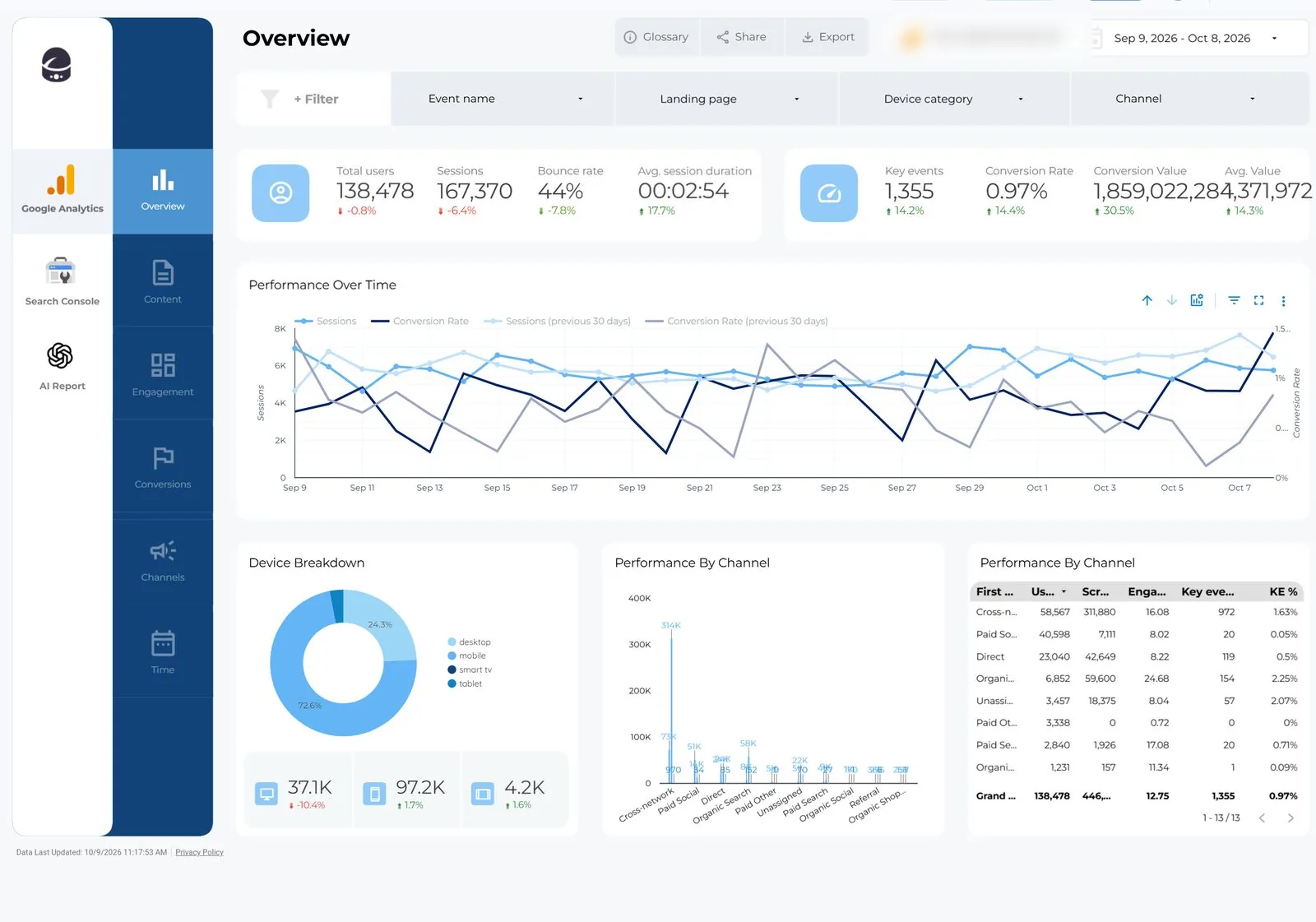
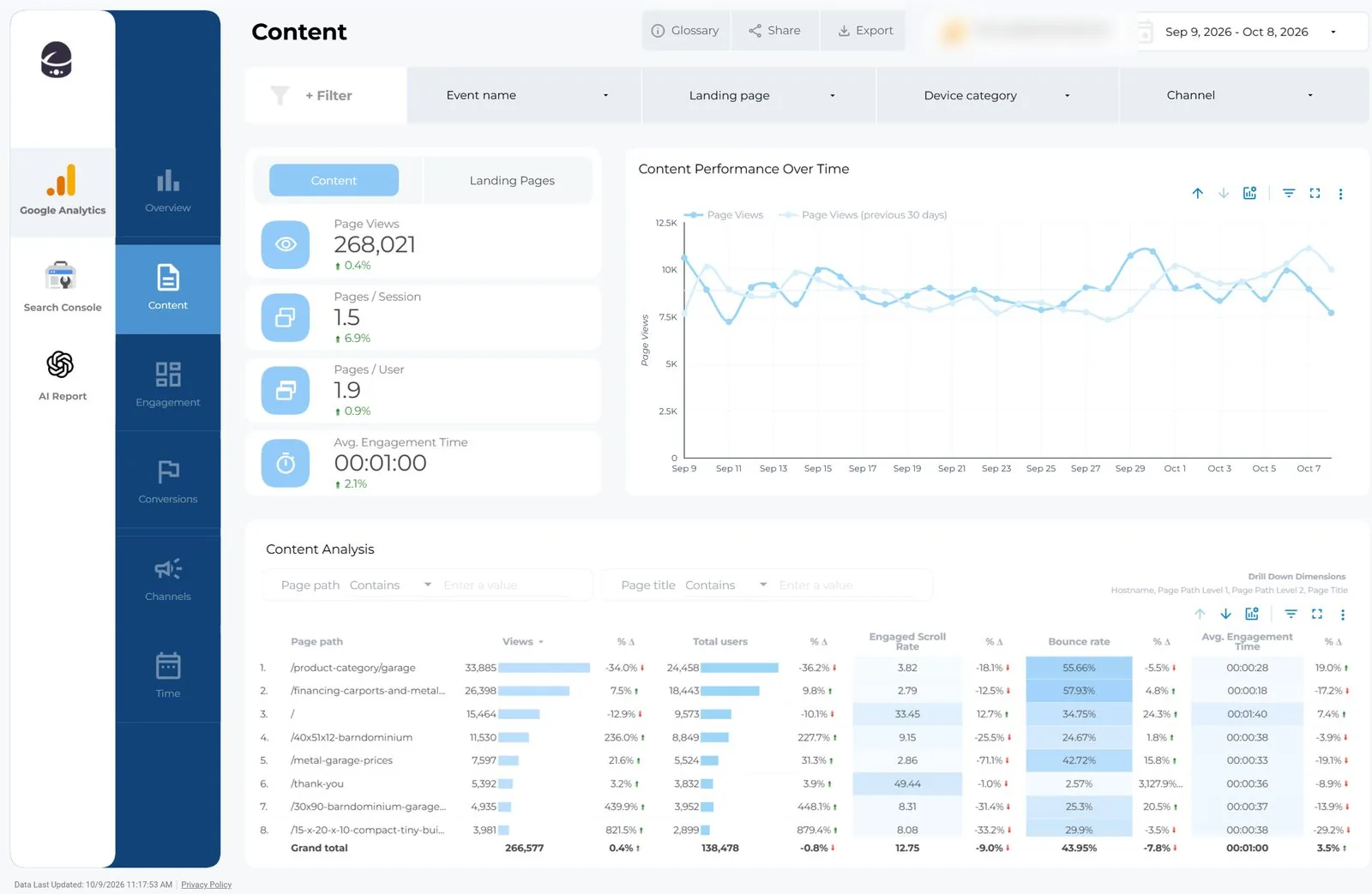
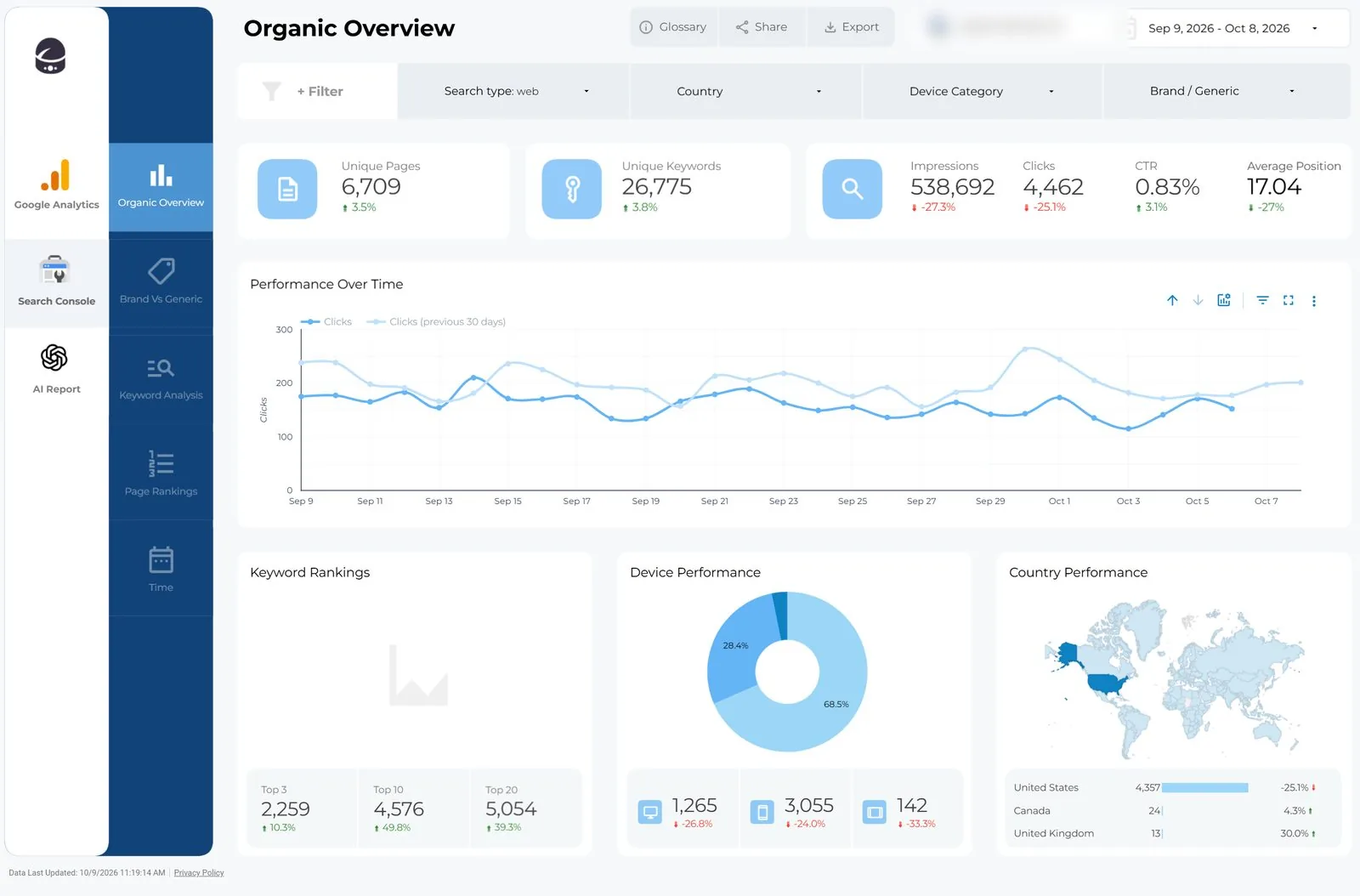
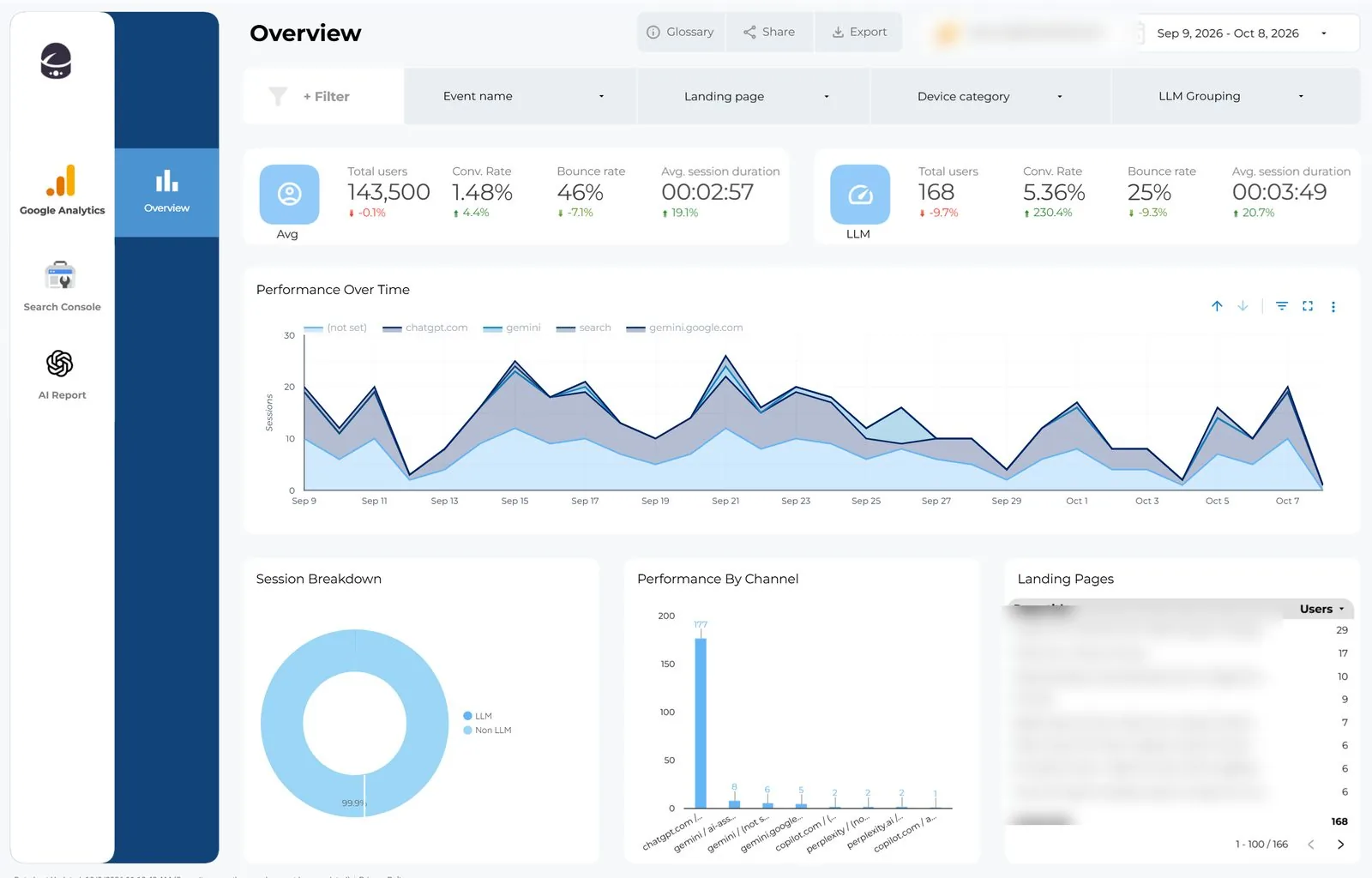
What it showed
In one 30-day window, visitors who arrived from AI assistants converted at 5.36%, more than three times the site average of 1.48%. The volume was still small (168 visitors), but it told the team two things: AI search is already sending buyers, and the pages it sends them to are worth improving first.
That's the point of the dashboard. Not more charts, but a short list of what to do next, with the numbers to back it up.
Built for the sales company I run marketing for. Figures are from one 30-day period and describe that business, not a promise for yours.
Do you know which channels bring buyers?
Fifteen minutes. I'll tell you where I'd look first, and whether I'm the right person for it.