Case study · Sales company · CRM and revenue operations
From a siloed quote tracker to one CRM that runs the business.
Quotes lived in standalone software with no connection to marketing, the ad platforms or accounting, and nobody knew the close rate. I led the move to one CRM and built the integrations and reporting around it.
The problem
The sales company tracked quotes in standalone software. It wasn't connected to marketing, the ad platforms, the phones or accounting. Leads came in from the website, e-commerce orders, live chat, call tracking, the help desk and voicemail, and people re-typed them, sometimes three times.
There was no real reporting. Nobody could say what the close rate was, which lead sources turned into sales, how fast reps followed up, or which reps were carrying the team. Ad platforms were optimizing for form fills, because they never heard about a sale.
What I led
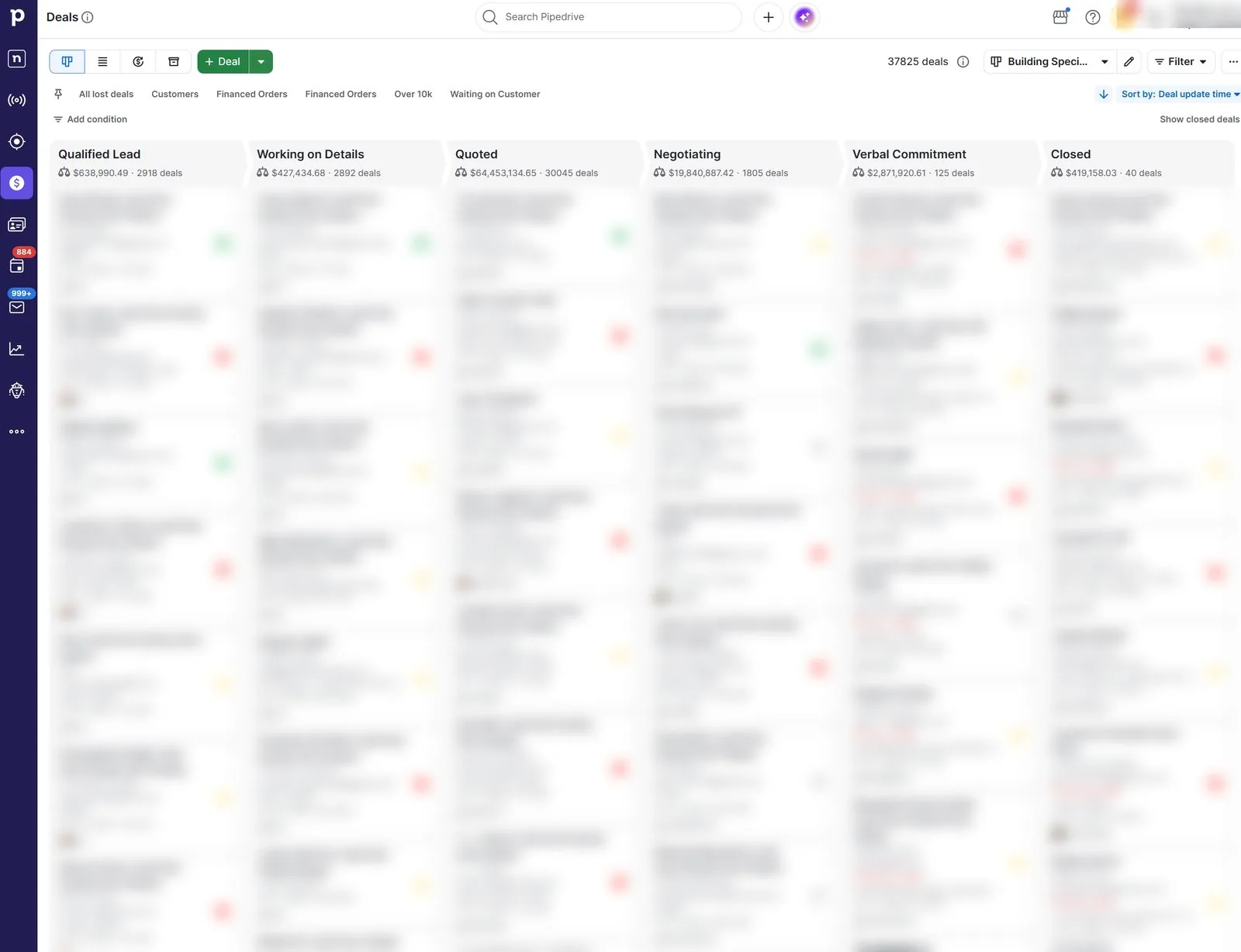
- The migration. 140 users and 500,000 records moved to Pipedrive in about six weeks, with a weekend cutover and no downtime. Deal stages with exit criteria, field definitions and ownership rules, and training for every manager and rep.
- Every lead in one place. Website forms, e-commerce orders, live chat, call tracking, help-desk tickets, voicemail and partner quote emails all flow into the CRM automatically. AI reads the quote emails and flags likely duplicate customers.
- An integration hub. A Python service with more than 80 endpoints connecting the CRM to e-signature, sales tax, wind and snow loads, Slack alerts, the handoff of sold orders to the manufacturer, and accounting events into QuickBooks with a human review queue.
- Closed-loop ad tracking. A customer data platform and offline conversions that send real sales back to Google, Meta and Microsoft, so ad budgets chase signed orders, not clicks.
- A new phone system, connected to the CRM, that saves more than $100,000 a year.
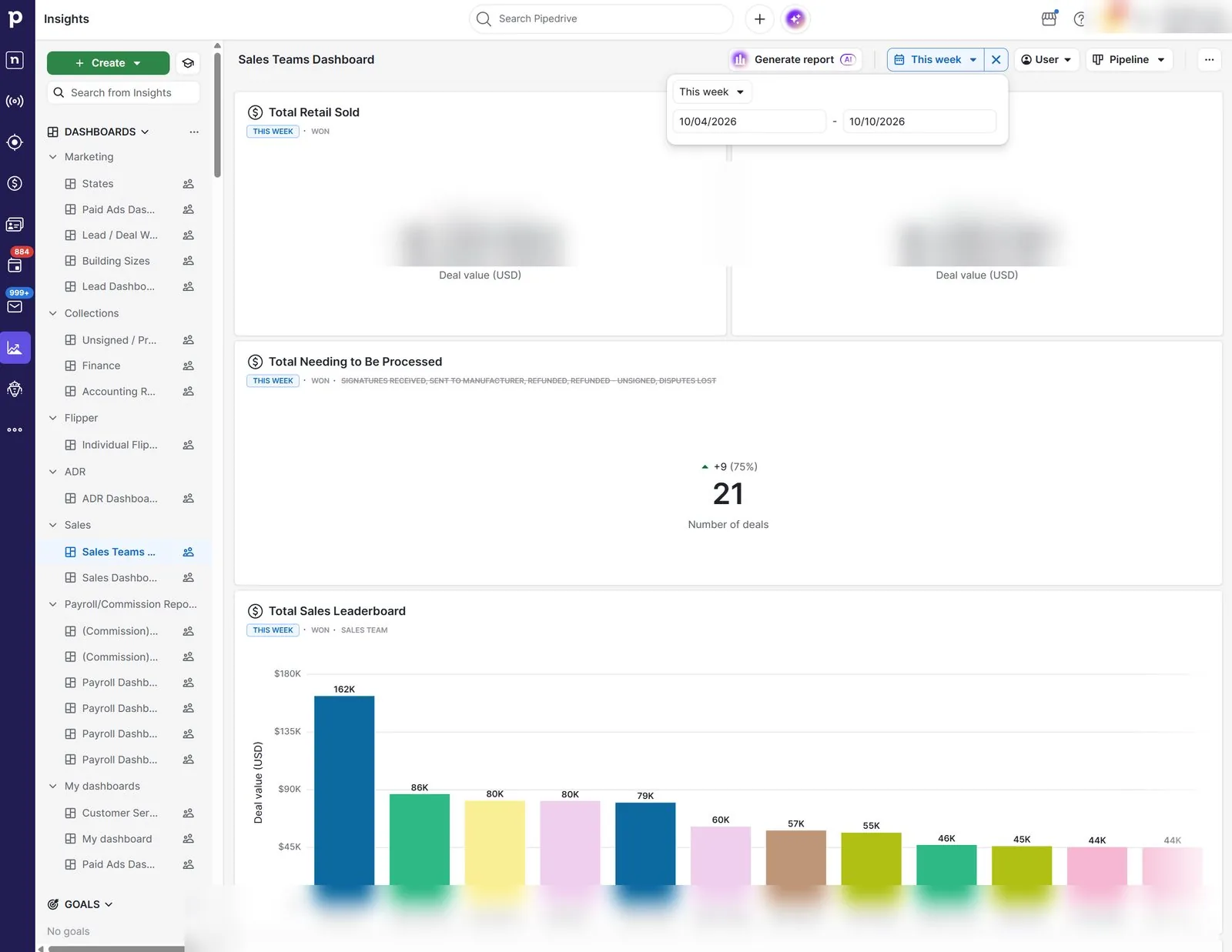
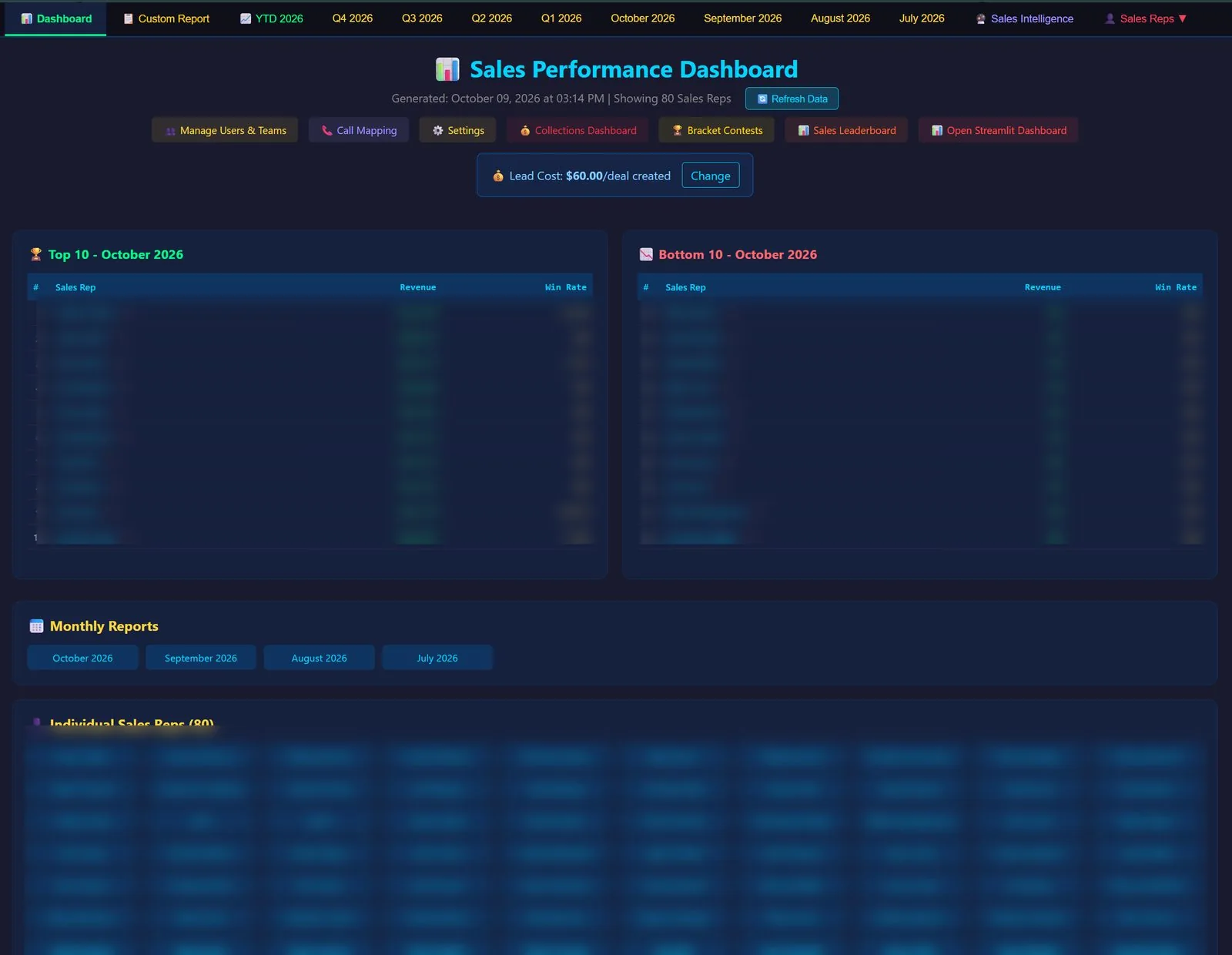
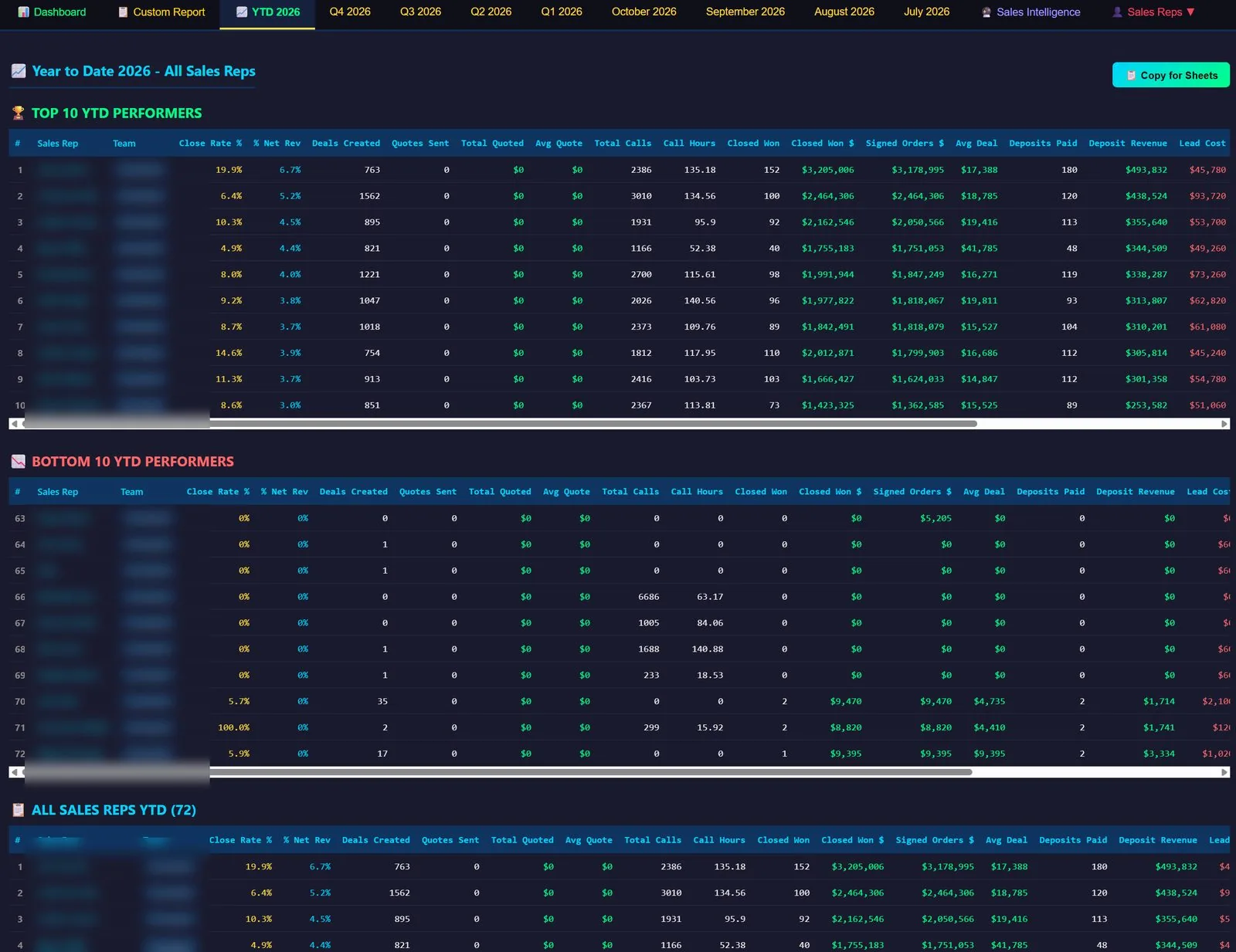
- Reporting people use. CRM dashboards for marketing, sales teams, collections, and payroll and commission, plus a sales performance dashboard with close rate, deals, quotes, calls, call hours, deposits and lead cost for every rep, by month and quarter.
What changed
Before
- Quotes in standalone software
- No close rate, conversion rate or KPIs
- Leads re-typed, sometimes three times
- Ads optimized on form fills
After
- One CRM for every lead, quote and order
- Close rates and conversion by source, rep and month
- Leads arrive automatically, entered once
- Ad platforms learn from real sales
With the data finally in one place, we could manage to it. Over the following year, the share of leads that got a quote went from 20% to 40%, the close rate went from 8.5% to 12%, and revenue per ad dollar rose 27%.
Work my team and I did in an executive operating role. Screenshots show the working systems with customer, dealer and staff names, contact details, costs, margins and pipeline totals hidden. Results describe that business and aren't a promise for yours.
How it was built
I set the architecture and the rules, wrote a share of the integration code myself, and directed in-house developers and an outside development partner. AI is part of the production system (reading quote emails and order forms, and catching duplicates) and part of how we built it.
Can you see your close rate by lead source?
Fifteen minutes. I'll tell you where I'd look first, and whether I'm the right person for it.