Case study · Manufacturing · Built with Claude
From quotes that took days to quotes in minutes.
A steel-building manufacturer had no real way to quote fast or know what a job cost. I designed and built the platform that fixed both: a 3D building designer, a bill-of-materials and costing engine, and the production tools the shop runs on every day.
The problem
The company builds custom steel buildings: carports, garages, barns and commercial structures, every one a different size and configuration. Each quote meant working out the structure, the materials and the price largely by hand. Quotes took days. Job costing didn't exist, so nobody could say what a given building actually cost to make, or which jobs made money.
On the shop floor, cut lists and material orders came from the same manual process, so ordering mistakes and scrap were part of the cost of doing business.
What I built
I'm Chief Commercial Officer there. I designed the system, wrote most of the core code myself and directed a small team of developers through production.
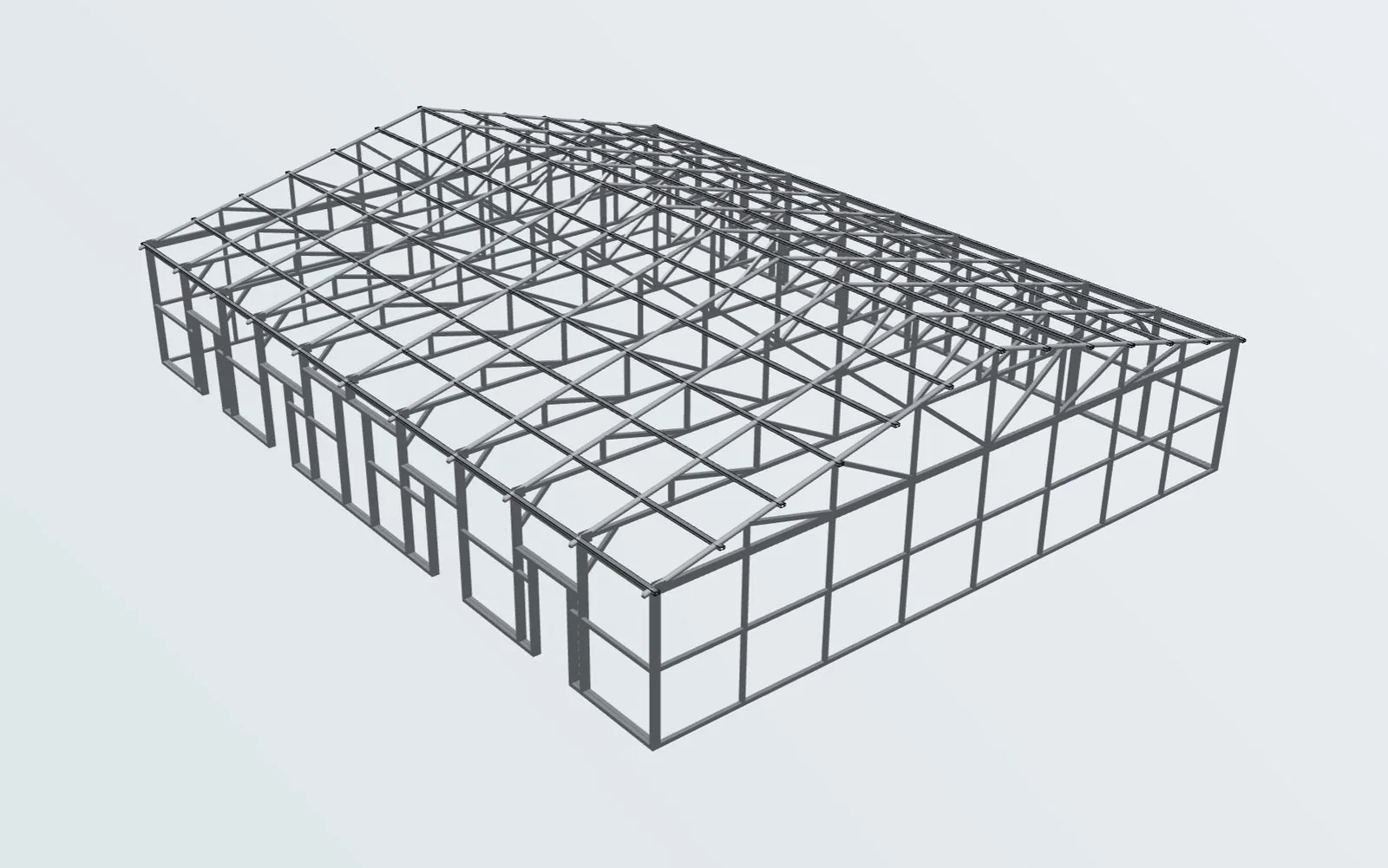
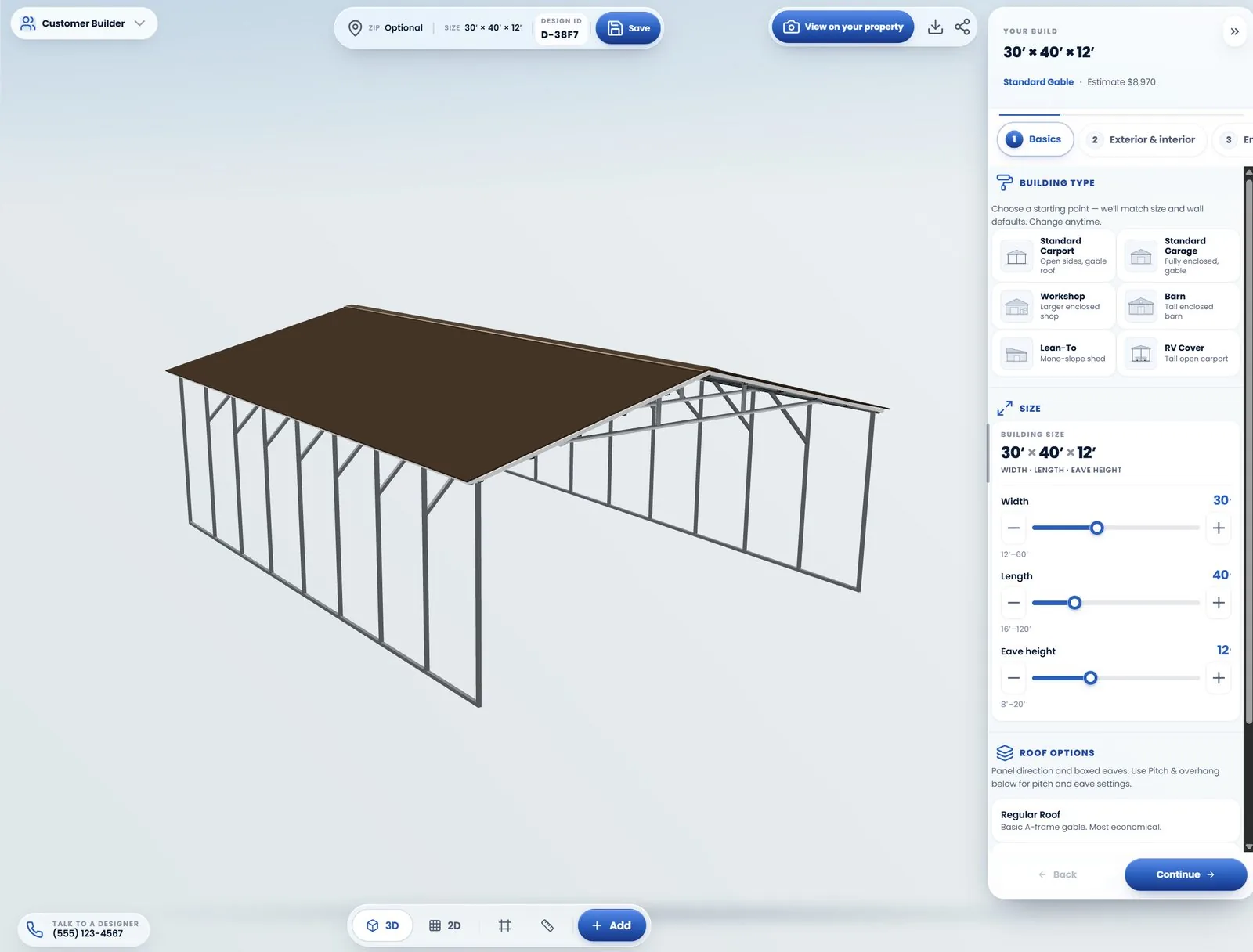
- A 3D building designer. With separate versions for the sales team, the shop and customers, anyone can configure a building and see it in 3D, with a floor-plan editor, wall elevations, installation cut sheets and an augmented-reality view.
- A bill-of-materials and costing engine. Every configuration produces its exact parts list, cost of goods and margin, the same numbers in the designer and in the back end.
- Production tools for the shop floor. Ten fabrication stations on tablets, production runs and material sheets, inventory that updates as work moves, and a tube-cutting optimizer that packs cut lists into stock lengths to cut scrap.
- Reporting and planning. Materials and ordering reports, forecasting, a financial model and an equipment payback calculator for buy-versus-make decisions.
- Connected systems. Deals flow in from the CRM, and orders move to and from the ERP, so nobody retypes a building.
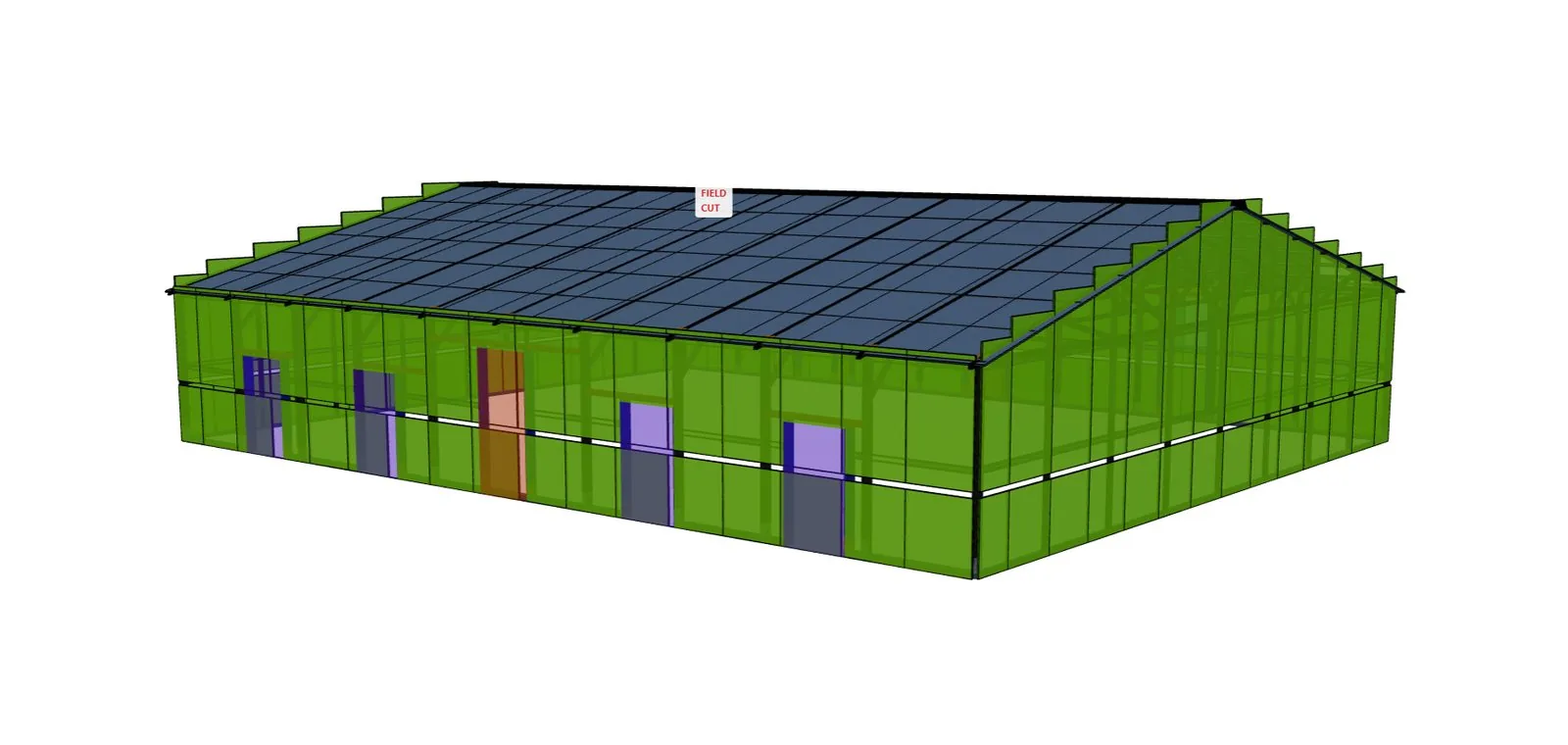
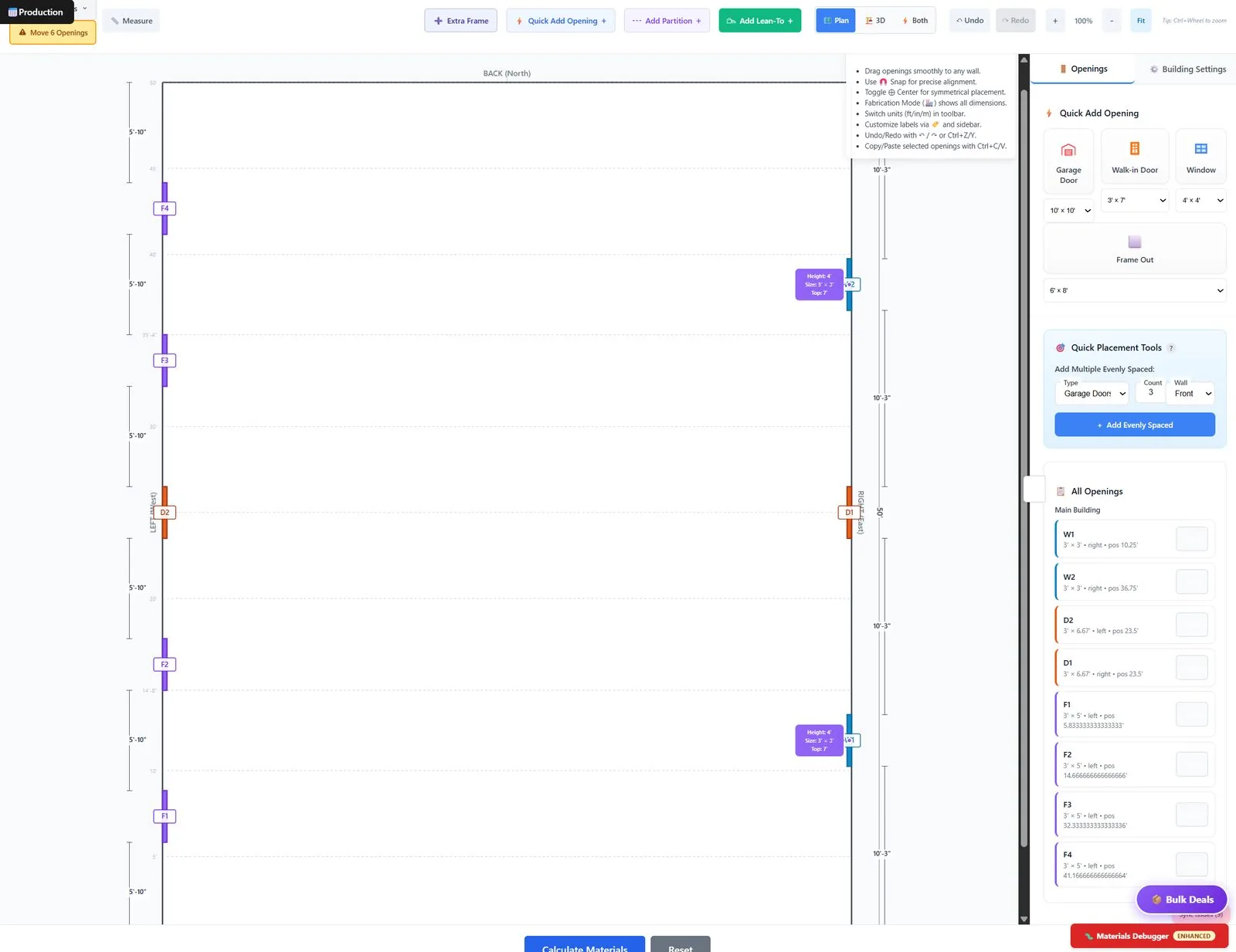
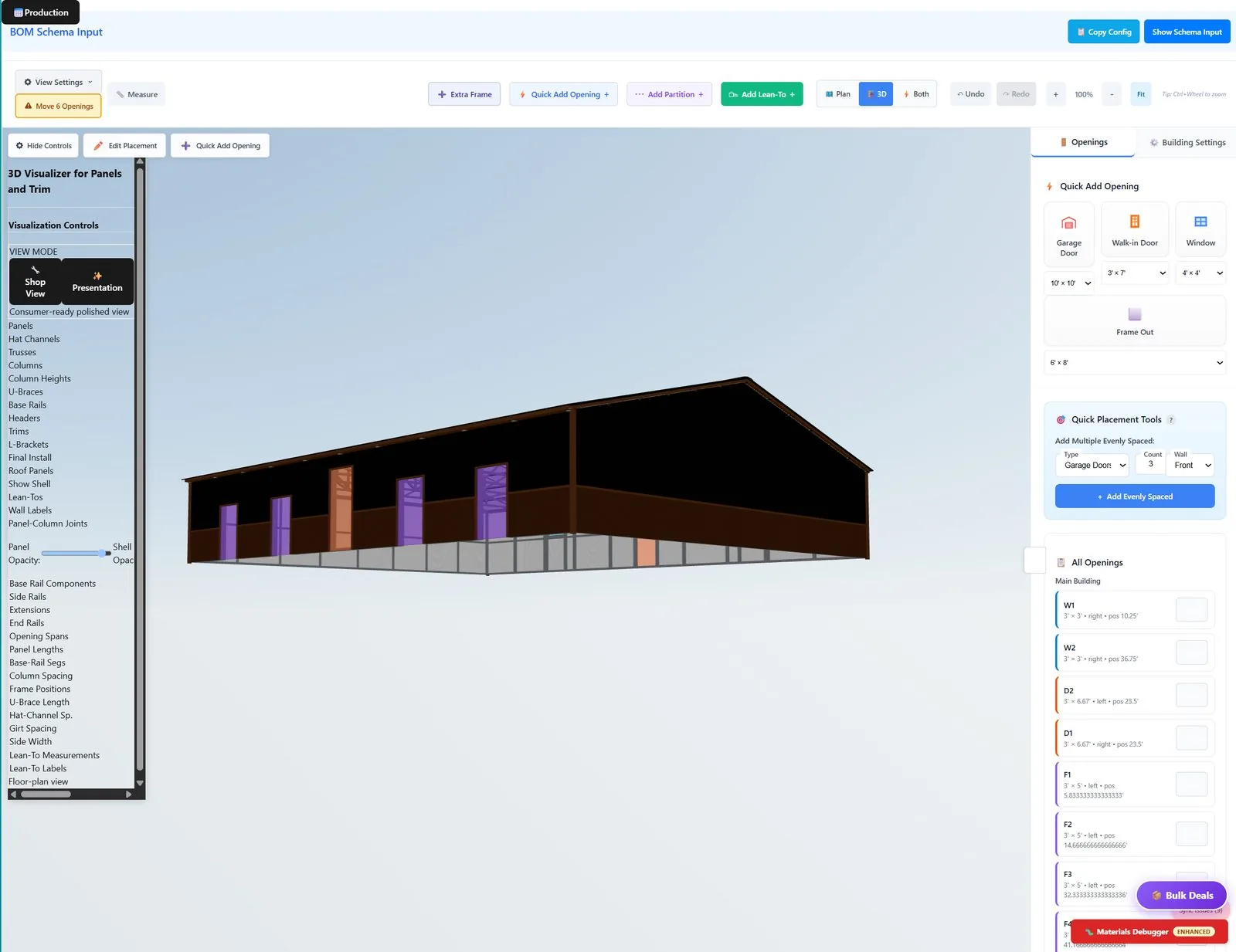
From a real export: part of the cut list the system generated for a 40' × 50' × 8' building rated for 107 mph wind. Costs removed.
| Component | Profile | Description | Cut length | Qty |
|---|---|---|---|---|
| Truss chords | 2.5" 14ga HSS | Flat-bottom truss, top chord | 44.08 ft | 11 |
| Truss sleeves | 2.25" 14ga HSS | Splice sleeve, 2 per frame | 0.58 ft | 44 |
| Legs / columns | 2.5" 14ga HSS | Side-wall column tubes (double) | 7.79 ft | 40 |
| End-wall columns | 2.5" 14ga HSS | End-wall column tubes (single) | 7.69 ft | 14 |
| Hat channel | 1.125" hat 18ga | Roof purlins | 25.67 ft | 28 |
| Knee braces | 18ga U-channel | Knee brace | 3 ft | 16 |
| Panel screws | Hardware, counted per building | 9,696 |
How AI was used to build it
I'm not a career software engineer. I'm a commercial executive who knows the business, the math and the shop. Claude is what made it possible for me to build this at a production level.
I built it with Claude, using the Opus, Sonnet and Fable models through Claude Code and the Cursor editor. Claude was my day-to-day engineering partner: designing the data model, writing and refactoring the 3D viewer and costing logic, generating tests for every pricing and BOM rule, and keeping the designer and the back end in agreement. The rules I wrote for the AI were simple: the back end is the single source of truth, changes must not break existing data, and the costs shown in the designer must match the costs in the back end exactly.
The result is roughly 1,000 code changes over about 16 months, around 4,000 automated tests, and tests that run on every change before anything ships. The AI wrote a lot of code. The tests are how we knew the numbers were right.
What changed
Before
- Quotes took days
- No job costing
- Margins unknown until long after the job
- Cut lists and orders built by hand
- Ordering mistakes and scrap
After
- Quotes in minutes
- Job costing on every building, for the first time
- Margin visible before the job is sold
- Parts lists and cut sheets generated automatically
- Fewer ordering mistakes, less scrap and faster production


Built in an executive operating role, with a small development team. Screenshots show the working system, with customer, cost and margin data left out. Results describe that business and aren't a promise for yours.
What this means if you hire me
I know what it takes to get AI into real production work: start from the process and the numbers, make the system the single source of truth, test the math, and keep a person in charge of anything that matters. Most of your problems won't need a platform this size. But when the answer is "build it," I've done it, and I'll measure it the same way, on the Margin Ledger.
Where is your business still running on workarounds?
Fifteen minutes. I'll tell you where I'd look first, and whether I'm the right person for it.